Description
What Rooibos Tea Is
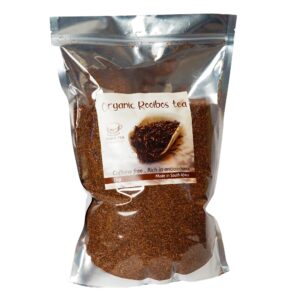
Rooibos (pronounced roy-boss) is a naturally caffeine-free herbal tea made from the leaves of the Aspalathus linearis plant, native to South Africa. Unlike black or green tea, rooibos does not come from the tea plant (Camellia sinensis), which makes it ideal for people sensitive to caffeine.
When brewed, rooibos produces a deep reddish-amber infusion with a smooth, naturally sweet taste.
2. How Rooibos Tea Is Made
After harvesting, rooibos leaves are:
-
Bruised and cut to release natural enzymes
-
Oxidized naturally in the sun (this gives the red color)
-
Dried to stabilize flavor and nutrients
This gentle processing preserves its antioxidant profile while eliminating bitterness.
(There is also green rooibos, which is unoxidized and more grassy, but classic rooibos is red and fuller-bodied.)
3. Flavor Profile
Rooibos is loved for its naturally smooth and comforting taste:
-
Mild sweetness
-
Honey-like or vanilla notes
-
Slight nutty or woody undertones
-
No bitterness or astringency
It can be enjoyed plain, with milk, or lightly sweetened—without overpowering the palate.
4. Caffeine-Free & Gentle
One of rooibos’ biggest strengths is that it is:
-
100% caffeine-free
-
Low in tannins
-
Gentle on the stomach
This makes it suitable for:
-
Evening or nighttime use
-
Pregnant or breastfeeding women (when approved by a healthcare provider)
-
Children
-
People with anxiety or caffeine sensitivity
5. Health & Wellness Benefits
Rooibos is naturally rich in polyphenols and antioxidants, which help protect the body from oxidative stress.
Key benefits include:
-
Supports relaxation and sleep
-
Soothes digestion and reduces bloating
-
Supports skin health (often linked to clearer, calmer skin)
-
Helps manage inflammation
-
May support heart health and blood pressure balance
-
Does not interfere with iron absorption (unlike some teas)
6. Mineral Content
Rooibos naturally contains small amounts of:
-
Magnesium (muscle & nerve relaxation)
-
Calcium (bone support)
-
Zinc (immune support)
-
Potassium (fluid balance)
These contribute to its reputation as a restorative, nourishing herbal infusion.
7. Who Rooibos Tea Is Best For
-
People avoiding caffeine
-
Those with sensitive digestion
-
Individuals seeking a calming daily ritual
-
Wellness and skincare-focused consumers
-
Anyone wanting a smooth, comforting tea without bitterness
8. How to Brew Rooibos
-
Use 1 teaspoon loose leaf per cup
-
Steep in boiling water (100°C) for 5–10 minutes
-
Longer steeping enhances flavor without bitterness